
Remote.com vs G-P
Remote and Globalization Partners (G-P) solve the same hiring problem differently. Remote built a platform that handles EOR, contractors, and global payroll in one system. G-P focused on EOR depth with service-managed compliance.
Remote.com vs G-P at a glance
| Service Area |
RRemote
|
GG-P
|
|---|---|---|
| Score (Whichapp composite, /10) | 8.0 | 7.6 |
| EOR pricing | $599$599/month flat ($699 monthly) | QuoteCustom fixed-fee, not publicly listed |
| Contractor payments | $29/contractor/month | G-P Contractor $39/month (180+ countries) |
| Global payroll | $29/employee/month | Custom pricing only |
| Country coverage | 90+ owned EOR (190+ contractor) | 180+ countries (100+ owned) |
| Time to hire | 1-2 weeks typical | 2-4 weeks typical |
| Minimum commitment | Month-to-month | Often annual contracts |
| Support model | Chat-first, self-service | Account management |
Remote vs G-P – verdict
Both run owned-entity EOR; that is the shared strength. Remote wins on owned-entity-first hiring across 90+ EOR markets, IP Guard, Carta equity partnership and transparent $599 pricing; G-P wins on 180+ country reach with 100+ wholly owned entities, in-house legal teams in complex jurisdictions and audit-grade compliance.
Price from
Remote
EOR $599/mo per employee annual ($699 month-to-month), contractor tiered $29 (basic) / $99 (Plus with $100k indemnity) / $325 (Contractor of Record with uncapped indemnity), no setup or platform fees, 15% startup discount for pre-seed through Series A in first 12 months.
G-P
EOR is a custom fixed-fee price G-P does not publish, positioned at a premium above Remote’s $599 and quoted on headcount and country mix; G-P Contractor is $39/mo across 180+ countries. G-P classifies contractors for IR35 but its terms leave misclassification liability with the client, so there is no true Contractor of Record. Confirm any setup fee or deposit in writing.
Best for
Remote
Series A-D tech startups and mid-market teams hiring in well-established markets who need IP Guard for R&D output, Carta equity administration from $39/mo, transparent pricing without sales conversations, and a tiered contractor compliance stack with optional misclassification protection.
G-P
Enterprises hiring 100+ employees across 15+ countries including frontier markets that Remote does not cover, regulated industries (financial services, biotech, manufacturing) needing audit-grade compliance, and existing SAP, Workday or ADP HCM stacks requiring deep EOR integration.
Deal breaker
Remote
Owned-entity EOR in ~90 markets leaves gaps in the frontier countries G-P reaches, and first-line support is reportedly underprepared for complex multi-jurisdiction compliance queries.
G-P
EOR is priced at a custom premium G-P does not publish, so budget modelling needs a quote first, and there is no IP Guard equivalent or true Contractor of Record for companies whose R&D output is the core asset.
How evaluated: cmp-g-p-vs-remote brief dated 2026-04-08 + G-P G2 rating 4.4/5 from 936 reviews + Remote IP Guard product documentation + Carta equity partnership from $39/mo · Whichapp evaluates comparison pages quarterly. No paid placement. Last checked: 2026-04-08.
Check current pricing and plans
Open each provider to compare current pricing, plans, and setup details.
What are the key differences between Remote.com and G-P?
The operational model drives every other difference. Remote gives you a platform to run yourself.
G-P assigns you an account team to handle complexity. That single choice cascades through pricing, support, compliance approach, and platform access.
Remote.com vs G-P on pricing
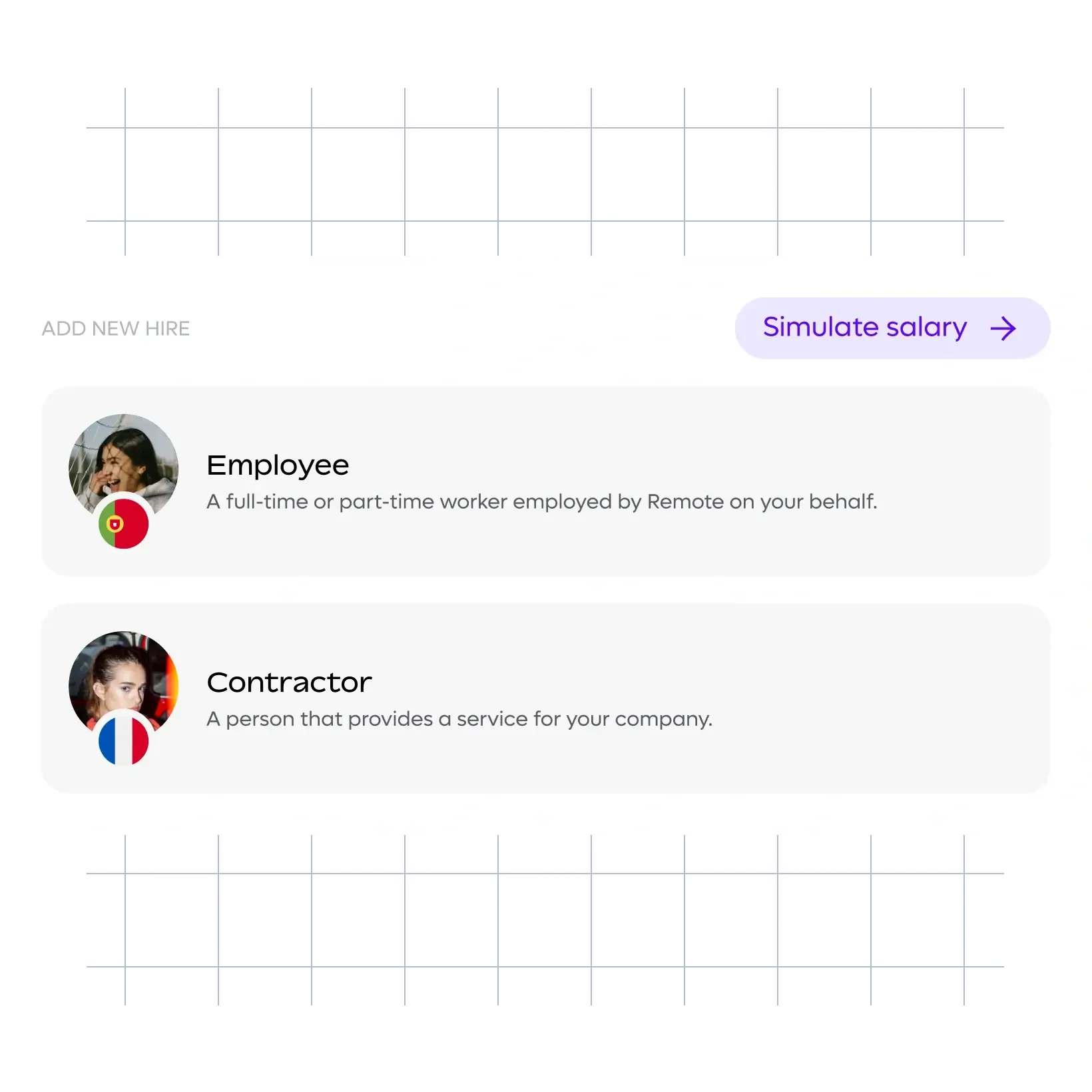
Remote publishes transparent pricing: $599/month for EOR, $29/month for contractors. G-P requires sales discussions and quotes custom rates based on headcount, countries, and service level.
Remote lets your Finance team build a spreadsheet and defend it. With G-P you present a range and explain why the final number might shift.
Procurement teams can extract better enterprise rates from G-P at 50+ international hires. Below that scale, Remote almost always lands cheaper on paper.
Remote.com vs G-P on compliance
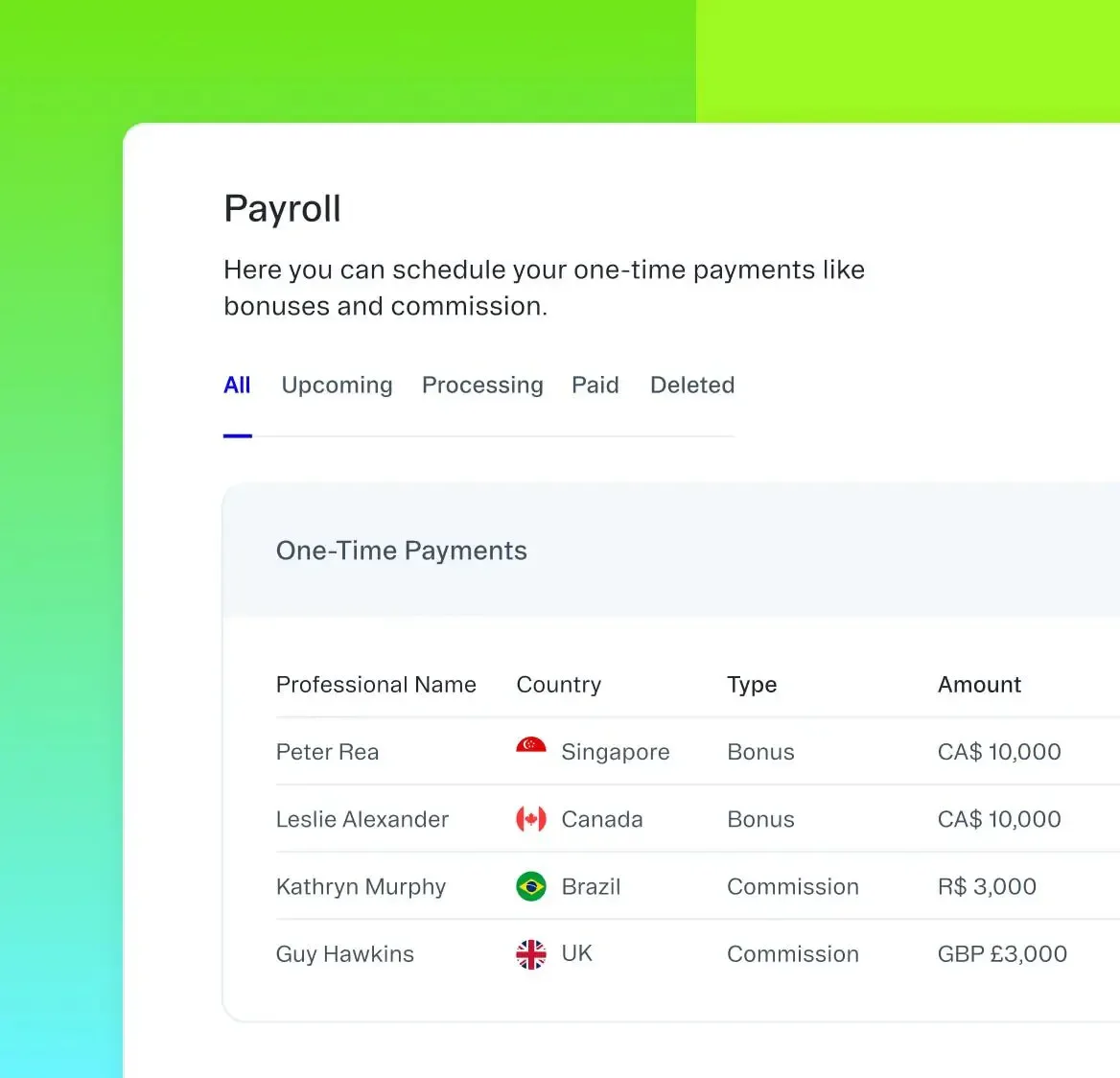
G-P’s managed service model means their legal team handles regulatory changes and contract updates. You get notifications, not tasks. Remote’s platform model puts more compliance tracking on your team, though the infrastructure and updates come from them.
Both run HMRC-recognised UK payroll. Remote is API-first with native connectors to Workday, BambooHR, HiBob, Personio, NetSuite, QuickBooks, Xero, Greenhouse and Vanta, plus equity administration through Easop; G-P leans on deep enterprise integrations (SAP SuccessFactors, Workday, UKG Pro, ADP Workforce Now) delivered through its G-P Meridian Suite and dedicated account management.
The difference becomes clear when Brazil changes employment law at 2 AM. With G-P, someone else loses sleep. With Remote, you get an email about required actions.
Remote.com vs G-P on country coverage
G-P reaches 180+ countries to Remote’s 90+ owned-entity EOR markets (Remote covers 190+ for contractors). But coverage depth matters more than breadth.
Remote owns its entities in 90+ EOR markets; G-P owns 100+ wholly owned entities and runs roughly 97% of its hires on them, using partners for the long tail. Both lean on partners only at the edges.
Remote built a deep highway through 90 countries. G-P built roads to 180, most through its own entities and the remainder via partners.
For mainstream markets (US, UK, Germany, Singapore), both work well. For Kazakhstan or Ghana, G-P likely has coverage where Remote does not.
Remote.com vs G-P on support
Remote built chat-first support with most issues resolved through self-service. G-P assigns account managers who handle issues by email and phone.
A German tax-code fix takes 20 minutes on Remote’s chat or 2-3 days through G-P’s account manager. Faster vs more managed.
Remote.com vs G-P on mixed workforce
Remote handles EOR employees, contractors, and global payroll in one platform at $29/contractor/month. G-P Contractor covers 180+ countries at $39/month, but the platform is built EOR-first, so a heavily mixed team is more tightly unified on Remote.
If you run 20 employees and 30 contractors across 10 countries, Remote means one invoice and one platform. G-P means juggling vendors.
How do Remote.com and G-P compare on pricing total cost?
Total Employment Cost Analysis
Senior Developer in Berlin: $100,000 salary
Remote total cost: $137,140/year
Platform fee: $7,188 (12 × $599)
Employer social contributions: ~$20,000
Mandatory benefits: ~$9,952
G-P total cost: Not modellable from a list price
Service fee: custom fixed-fee quote (G-P does not publish a per-employee rate)
Employer social contributions and benefits broadly similar to Remote
Confirm any setup fee or deposit in the quote
A 20-person distributed team with 12 employees and 8 contractors costs Remote $7,488 for EOR + $232 for contractors = $7,720/month.
G-P bundles services differently: G-P Contractor is a separate product at $39/month, and global payroll is custom enterprise pricing. Because G-P does not publish an EOR rate, model its cost from the written quote rather than a list price, and confirm any setup, termination or special-handling fees up front.
How do Remote.com and G-P compare on compliance depth?
G-P’s history as the category pioneer (founded 2012) shows in its legal depth, backed by its Global Compliance Engine, a real-time check that employment tasks align with local rules, and its G-P Gia AI assistant. Its UK payroll is HMRC-recognised.
Their compliance team actively manages regulatory changes; relationships with local counsel and tax offices often provide advance warning. Remote’s younger infrastructure focuses on major markets in Europe, North America, and primary Asian markets, with reactive platform updates in Africa and Latin America.
Both providers include IP assignment in standard contracts. Remote’s tools force you to answer classification questions, creating an audit trail.
G-P’s advisors tell you the answer but leave less documentation. For borderline cases where misclassification risk runs high, G-P’s advisory approach helps.
For clear cases, Remote’s self-service tools are quicker.
Whichapp view
Remote markets owned-entity hiring but uses partners beyond its ~90 core EOR markets; G-P owns 100+ entities (around 97% of its hires) and uses partners for the long tail of its 180+ reach. Always verify entity ownership for your specific countries during procurement; neither provider’s marketing tells the full story.
Which should you choose: Remote.com or G-P?
Choose Remote if
- Your team prefers modern software over managed services, has HR ops experience, and wants platform consolidation. Price transparency and predictable costs help your budgeting. Remote particularly suits venture-backed startups, tech companies, and distributed teams comfortable with self-service tools.
Choose G-P if
- Your Legal or Finance team prioritises risk mitigation over cost savings, complex compliance keeps you up at night, or you need coverage in difficult markets beyond Remote’s ~90 owned EOR countries. G-P fits traditional enterprises, companies entering new markets cautiously, and organisations with complex employment needs.
Consider an alternative if
- You need regional depth: Papaya Global (EMEA) or Multiplier (APAC) might serve you better. For modern platform UX with broader payment options, Deel matches Remote’s approach with aggressive growth pricing.
Whichapp tool
EOR Fee Comparison
Compare total employment costs across providers by country and salary level
How did Whichapp compare Remote.com and G-P?
We evaluated both providers through published pricing analysis, user review aggregation from G2 and Capterra (filtering for reviews from the past 12 months), and regulatory filing reviews where available. Coverage claims were spot-checked through support interactions.
Pricing scenarios were modelled using public calculators and confirmed salary data. Total employment costs include mandatory employer contributions calculated from official sources.
We maintain commercial relationships with both Remote and G-P through affiliate partnerships. These relationships do not influence our editorial assessments. Neither platform was directly tested with live employees for this comparison; platform descriptions come from demo access and user-reported experiences.
Check current pricing and plans
Open each provider to compare current pricing, plans, and setup details.
Remote.com vs G-P: Frequently Asked Questions
Which is cheaper, Remote or G-P?
Remote publishes a transparent $599/month, while G-P quotes a custom fixed fee it does not list publicly, positioned at a premium. For straightforward employment in standard markets, Remote almost always costs less on paper; enterprise buyers hiring at scale can negotiate G-P closer to Remote’s published rate.
Does Remote or G-P offer better compliance protection?
G-P’s managed service model provides deeper compliance protection because their legal team actively manages regulatory changes and handles complex situations. Remote provides solid infrastructure and compliance tools but expects more self-management. For high-risk industries or complex jurisdictions, G-P’s approach offers better protection.
Do Remote and G-P really own entities in all their countries?
Not in every market. Remote owns its entities in 90+ EOR countries and uses partners beyond; G-P owns 100+ entities and runs roughly 97% of its hires on them within its 180+ reach.
Both use partners to fill gaps. Always verify entity ownership for your specific countries during procurement.
Whichapp data sources used in this comparison
- Employer cost and burden: total employment cost by country
- Provider coverage and entity model: verified country availability data
- Fully burdened cost model: total employer cost including platform fees, taxes, and benefits
Whichapp Research used in this comparison
- EOR Cost Benchmark: published EOR fee ranges and pricing model disclosure across providers
- EOR vs Entity Break-Even Benchmark: 40-country break-even analysis: EOR vs own legal entity with cost thresholds
How We Compared These Providers
Whichapp is an independent comparison site for global payroll, EOR, and contractor management platforms. We do not sell these services and do not accept payment for editorial placement. We may earn a commission if you book a demo or request a quote through links on this page. This comparison was produced by our editorial team and was not reviewed or approved by either provider before publication.
Data Sources
- Provider pricing pages for both brands (verified April 2026)
- G2 and Capterra reviews for both brands (Jan–Apr 2026)
- Provider help centre documentation and country guides
- Whichapp provider score composite data (see sources & data)
Research Approach
- Pricing model and total employment cost
- Entity model and compliance infrastructure
- Country coverage depth and quality
- Platform usability and onboarding experience
- Customer support model and response standards
- Verified user feedback from G2 and Capterra
Both providers were assessed across the same six dimensions: pricing model and total employment cost, entity model and compliance infrastructure, country coverage depth and quality, platform usability and onboarding experience, customer support model and response standards, and verified user feedback from G2 and Capterra. Neither provider was engaged for a paid pilot or contract as part of this comparison.