
UK · Payroll & compliance
UK Review Freeagent
If you bank with NatWest, Royal Bank of Scotland, or Ulster Bank, FreeAgent is already yours, free for as long as you keep the account. That single fact shapes most buying decisions in this category.
For a director-only limited company or a sole trader who already pays themselves monthly and needs integrated accounting plus payroll, the effective cost is zero and the setup is legitimate.
That is a strong opening position.
The constraint most reviews gloss over is this: FreeAgent only supports monthly pay frequency. If you pay any staff weekly or fortnightly, the RTI filing system will not process those runs.
You would need to use a separate payroll tool alongside FreeAgent and manage the accounting reconciliation manually.
For the narrow use-case the product is genuinely built for, this rarely surfaces. But “rarely” is not “never,” and knowing the boundary before you commit matters.
Should you choose FreeAgent Payroll?
Pricing and features reviewed April 2026
What is FreeAgent Payroll, and who owns it?
FreeAgent is cloud accounting software designed for UK freelancers, contractors, and small businesses. Payroll is built into every plan, not sold as a separate add-on.
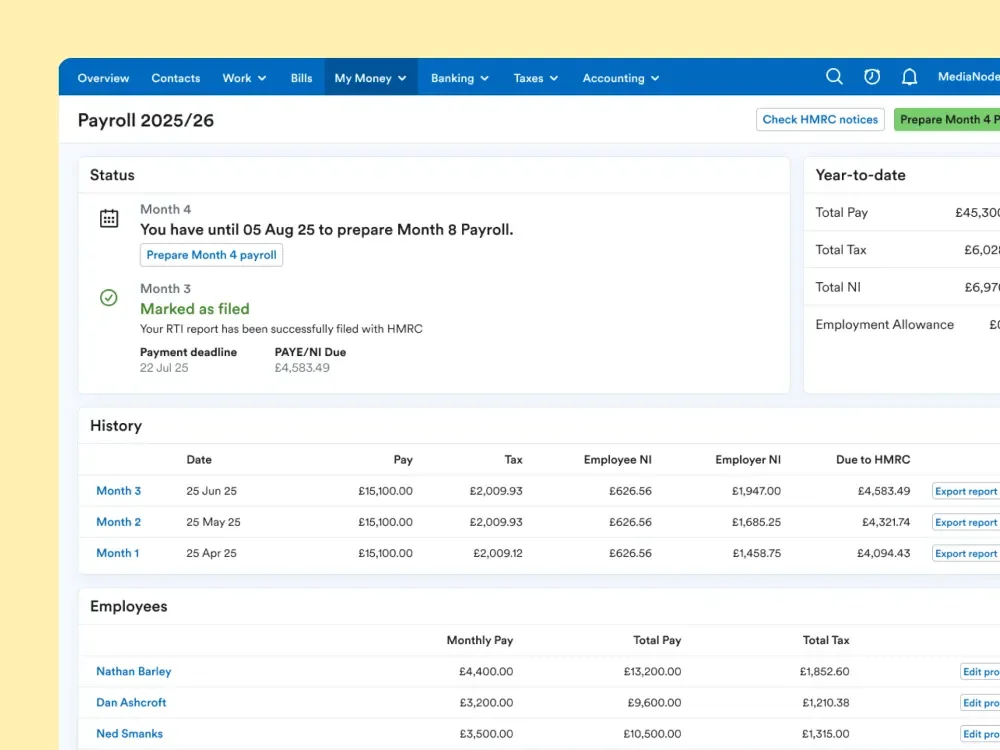
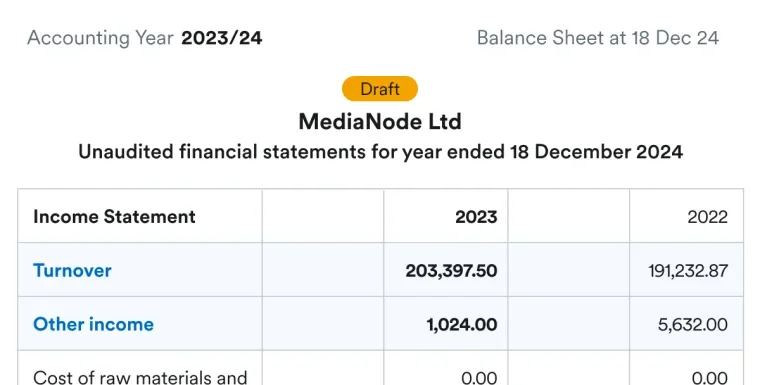
When you run a pay run in FreeAgent, the figures flow directly into your accounts ledger, RTI submissions go to HMRC, and payslips are generated for employees, all inside the same interface you use for invoicing and VAT returns.
NatWest Group acquired FreeAgent in March 2018 for £53 million.
That ownership structure has a direct practical consequence: every NatWest, Royal Bank of Scotland, and Ulster Bank business current account holder receives FreeAgent free, for as long as they retain the account.
There are an estimated 850,000 NatWest business banking customers in the UK. If you are one of them, the software cost is zero before you evaluate a single feature.
This is not a bank-branded lite version. NatWest customers get the same product as paying subscribers.
We checked: the payroll module, RTI filing, auto-enrolment support, and CIS tools are all present on the free banking tier.
Who is FreeAgent Payroll best for?
FreeAgent’s payroll function works best for a specific profile: a UK limited company director taking a monthly salary, often optimised to the National Insurance threshold, alongside dividends.
This is the standard tax-efficient structure for most UK contractor and freelancer limited companies, and FreeAgent handles it cleanly.
Setup takes under 30 minutes, payroll journals post automatically, and the RTI submission to HMRC follows in a few clicks.
You are not tied to switching at the start of a tax year either. FreeAgent says you can move your payroll across at any point, which means a mid-year switch is workable if you are leaving another tool partway through the year rather than waiting for April.
Details last checked: 2026-06-30; primary source: freeagent.com
Sole traders and partnerships are also well served, though the payroll dynamic is different. Sole traders cannot put themselves on a formal payroll (legally they are the business, not an employee of it), but they can run payroll for any employees they take on.
FreeAgent’s interface handles this correctly without you needing to understand the tax code distinctions.
For small businesses with 2–10 salaried employees paid monthly, FreeAgent is a workable payroll system that removes the need for a separate product.
The accounting integration saves genuine time: you do not maintain two systems, export CSVs between them, or reconcile payroll journals manually at month-end.
For a one-person finance function, that is one fewer system to log into and one fewer reconciliation to get wrong each month.
Construction micro-businesses get an additional benefit. FreeAgent handles CIS for both contractors deducting from subcontractor payments and subcontractors reconciling those deductions against their payroll liability.
It does not handle contractor verification letters or CIS deduction statements with the depth of a dedicated tool, but it covers the basics and avoids the need for a separate product in most cases.
If your CIS work is routine deductions and monthly returns, that is enough; if you live in verification letters and deduction statements, treat it as a starting point, not the finished tool.
Who should avoid FreeAgent Payroll?
The monthly-only restriction is the most disqualifying limitation in this category. If your business pays any workers weekly or fortnightly (hourly staff, part-time employees, casual workers) FreeAgent cannot file those RTI submissions.
You would need BrightPay, Sage, or another tool to handle those pay runs, at which point FreeAgent’s payroll integration has lost most of its value.
Businesses growing toward a headcount where multiple pay frequencies become common (think: a small hospitality or retail operation with a mix of salaried managers and hourly floor staff) should evaluate alternatives from the start rather than migrating under pressure later.
If you need direct pension submission to NEST or The People’s Pension, FreeAgent is not the tool. It generates an export CSV that you upload manually to your pension provider’s portal.
That adds a step to every pay run.
For a two-person business, that step is a minor inconvenience.
For a 15-person business with auto-enrolment obligations across multiple staging dates, the manual upload generates compliance risk: a missed upload month means contributions are not received on time, which creates penalty exposure.
Xero and BrightPay both submit directly to NEST without a manual step.
FreeAgent does not, except for NOW: Pensions.
If your accountant uses Xero, they may push back on FreeAgent. The two systems do not integrate natively.
Your accountant would need to work in FreeAgent directly or request exports, which creates a workflow friction that does not exist when client and accountant share a Xero practice environment.
What does FreeAgent Payroll cost in 2026?
Payroll is included in all FreeAgent plans without an additional per-employee charge. Pricing varies by business type, with a 50% introductory discount for the first six months. All prices are ex-VAT.
| Business type | Intro price (first 6 months) | Full monthly price | Annual equivalent |
|---|---|---|---|
| Limited company | £14.50/mo | £29/mo | £290/year |
| Partnership / LLP | £12/mo | £24/mo | £240/year |
| Sole trader | £9.50/mo | £19/mo | £190/year |
| NatWest/RBS/Ulster/Mettle business account holders | £0 | £0 | £0 |
Source: FreeAgent pricing page and payrollprices.com verification. Prices ex-VAT. Verified April 2026.
The free tier is not limited to the high-street brands. FreeAgent confirms the same arrangement for Mettle business account holders, so a Mettle account qualifies for a FreeAgent plan at no charge for as long as you keep the banking relationship open.
Details last checked: 2026-06-30; primary source: support.freeagent.com
The pricing comparison that matters most for most readers: Xero Payroll on the Grow plan (the cheapest plan with payroll) costs £28/month for the platform plus £1.50 per employee per month.
For a 5-employee business, that is £35.50/month. FreeAgent for a limited company with 5 employees is £29/month, with the accounting and payroll features bundled.
The gap widens further if you can access FreeAgent free via NatWest banking.
Cost comparison
FreeAgent vs Xero Payroll: 5-employee limited company
FreeAgent (limited company plan): £29/month. Xero Grow + 5 employees: £28 + £7.50 = £35.50/month. Annual difference: £78/year.
FreeAgent free via NatWest: saving of £348/year versus Xero Grow.
For a 10-employee limited company: FreeAgent £29/month vs Xero Grow £43/month. FreeAgent saves £168/year before the NatWest discount is applied.
What does FreeAgent Payroll actually include?
We reviewed FreeAgent’s payroll feature set against the standard checklist for a UK PAYE system. Here is what is present and what is absent.
Core PAYE is handled: gross pay calculation, income tax deduction (basic and higher rate thresholds), National Insurance contributions for both employee and employer, and statutory deductions. The system generates payslips automatically and archives them against each employee record.
P60s are produced at year-end without a separate process.
RTI compliance is solid for monthly pay runs. FreeAgent submits Full Payment Submissions to HMRC automatically, and Employer Payment Summaries for months with no payments or statutory reclaim adjustments.
The system is HMRC-recognised software.
Auto-enrolment is supported, with an important nuance.
FreeAgent assesses employees each pay run for enrolment eligibility, calculates the required contribution split (5% employee, 3% employer minimum), and generates contribution files.
For NOW: Pensions, the integration is direct. For NEST, Smart Pension, and The People’s Pension (the most widely used schemes), FreeAgent produces a CSV that must be manually uploaded to the pension provider’s portal.
That is one extra step per pay run.
Statutory payments are covered: Statutory Maternity Pay, Statutory Sick Pay, and Statutory Paternity Pay are all calculated within the system, with HMRC-correct rates applied.
Student loan deductions (Plan 1, Plan 2, and Postgraduate) are handled automatically when set on an employee’s record.
CIS is available for contractors and subcontractors: a genuine differentiator for construction micro-businesses that most accounting tools treat as a secondary feature.
One gap matters if you give staff taxable benefits. FreeAgent does not support P11D or P11D(b) forms, and it does not yet support payrolling benefits in kind. That is a live concern rather than a niche one: HMRC is making the payrolling of benefits mandatory from April 2027 (postponed from 2026), so a business that runs company cars, private medical cover, or similar perks through FreeAgent will need a separate route for those benefits before the deadline.
Details last checked: 2026-06-30; primary source: support.freeagent.com
Whichapp view
FreeAgent’s payroll is built for the director-salary scenario first and small-employer payroll second. The feature set passes the HMRC compliance test cleanly for monthly, salaried employees.
It does not try to be a full payroll bureau system, and it should not be judged as one.
The missing weekly/fortnightly support is not an oversight: it is a product boundary. Positioning FreeAgent as a payroll tool for businesses with shift workers or hourly staff would be a misfit that creates compliance problems.
The vendor is honest about this in its support documentation.
Is FreeAgent Payroll trustworthy for HMRC compliance?
For the use-case it supports, yes. FreeAgent is HMRC-recognised software for RTI, MTD-compatible for VAT, and handles direct Self Assessment and Corporation Tax filing.
The compliance infrastructure for a standard PAYE monthly payroll is established and tested.
The compliance risk area is not the software; it is the operator. FreeAgent is designed to be accessible to business owners without payroll training, which is its strength.
That accessibility is also its potential failure mode. An operator who does not understand the distinction between gross and net pay, or who does not know how to handle a leaver mid-tax period, can create RTI submissions that are technically filed but factually incorrect.
The software files what you tell it to file.
There is no evidence in support forums or review aggregators of systematic FreeAgent filing errors that generated HMRC penalties at scale.
Isolated user complaints about incorrect NI calculations surfaced in forum discussions, and these typically traced to incorrect employee settings rather than product bugs.
FreeAgent is backed by NatWest Group. That ownership provides financial stability and resource for compliance updates when HMRC changes rates or introduces new statutory payment categories.
You are not dependent on a small independent software vendor to ship a critical update before April of each year.

What do FreeAgent customers say?
Trustpilot score: 4.5/5 from 2,821 reviews (April 2026). App Store rating: 4.8/5 from over 9,400 reviews. Android: 4.7/5.
These are strong numbers for business software, and the volume makes them meaningful rather than self-selected.
The consistent praise across review sources is ease of use, clean interface, and the sense that doing things like submitting your VAT return or running payroll actually takes minutes rather than hours.
For a first-time business owner who has never run payroll before, that is the difference between filing on time and putting the run off until it becomes a problem.
Reviewers specifically mention that FreeAgent’s guided setup makes PAYE less intimidating.
Common complaints fall into three categories.
First, data export is awkward: filtering reports and exporting them cleanly requires workarounds that reviewers find frustrating, particularly for accountants who want to pull structured data for client files.
Second, bank sync reliability: occasional connection failures with bank feeds create reconciliation gaps that require manual correction.
Third, customer support response times: FreeAgent does not offer phone support, and email response times during busy payroll periods (month-end, April year-end) generate consistent criticism.
If something goes wrong with an RTI submission on a Friday afternoon before a bank holiday, your resolution path is email.
Best alternatives to FreeAgent Payroll
The right alternative depends on what specifically makes FreeAgent the wrong choice for your situation.
For weekly or fortnightly payroll: BrightPay review. BrightPay supports all HMRC-recognised pay frequencies and is built for employers who need flexibility in how pay runs are structured.
It is substantially cheaper than Xero for standalone payroll, under £200/year for up to 100 employees, and handles complex scenarios (multiple pay rates, irregular payments, mid-period changes) more robustly than FreeAgent.
For direct pension auto-submission without manual CSV uploads: Xero Payroll review. Xero submits contribution files directly to NEST, Smart Pension, and The People’s Pension without a manual export step.
If you have more than 5 enrolled employees, that automation is worth the higher monthly cost.
For standalone payroll without accounting bundled in: Sage Payroll review. Sage’s dedicated payroll product sits outside the accounting ecosystem and starts at around £20/month for a small employer.
If your accountant uses a different accounting system and you do not want to pay for FreeAgent’s accounting features to get payroll, Sage is the most direct comparison.
For larger teams outgrowing micro-business tools: Moorepay. Moorepay targets 50+ employee businesses with more complex payroll needs including multiple pay groups, detailed HR integrations, and dedicated account management.
FreeAgent is not competing in that segment.
Is FreeAgent Payroll worth it?
For the right buyer, the question is almost irrelevant, because the answer is so clearly yes. If you bank with NatWest, RBS, or Ulster Bank, you are already paying for FreeAgent via your banking relationship.
Running payroll through it costs you nothing incremental and saves you a separate tool subscription.
For everyone else, the calculation rests on pay frequency and pension integration needs. Monthly payroll, salaried employees, and a willingness to do a manual pension CSV upload once a month: FreeAgent is a reasonable choice at a competitive price.
The accounting integration removes the reconciliation overhead that makes standalone payroll tools feel like they are only half solving the problem.
The honest edge case is a limited company director running their own business, paying themselves a salary below the NI threshold each month, using NatWest for business banking. That is FreeAgent’s optimal user.
Payroll takes five minutes.
The HMRC submission happens automatically. There is nothing to add and nothing to reconcile. That is the product at its best.
Buy it if you pay monthly, bank with NatWest, RBS, or Ulster Bank, and can live with a once-a-month pension upload. Walk away the moment you need weekly pay runs or hands-off pension submission. Knowing exactly where that line sits is the useful part of this review.
See our ranked shortlist of providers, scored for HMRC submission reliability, statutory-pay handling, and pricing transparency. Updated for 2026.
View the shortlist →FreeAgent Payroll FAQs
Frequently asked questions
How much does FreeAgent Payroll cost?
Payroll is included in all FreeAgent plans at no extra charge. Plans cost £19/month (sole trader), £24/month (partnership), or £29/month (limited company), ex-VAT, after the 50% introductory discount period.
NatWest, RBS, and Ulster Bank business account holders pay £0 for FreeAgent as long as they retain their account.
What are the main limitations of FreeAgent Payroll?
FreeAgent only supports monthly pay frequency. Weekly and fortnightly payroll cannot be filed through FreeAgent.
Auto-enrolment CSV files for most pension providers (NEST, The People’s Pension, Smart Pension) require manual upload rather than direct submission.
There is no phone support; resolution paths for urgent payroll issues run through email only.
Does FreeAgent submit RTI directly to HMRC?
Yes. FreeAgent is HMRC-recognised software for Real Time Information submissions. Full Payment Submissions (FPS) are filed on or before payment date, and Employer Payment Summaries (EPS) are generated automatically for months with statutory reclaims or no payments.
This works only for monthly pay runs.
Is FreeAgent good for a small limited company with employees?
Yes, for a limited company with up to 10 salaried employees paid monthly. FreeAgent handles PAYE, NI, statutory payments, auto-enrolment, and payroll journaling to the accounts ledger in one interface.
For any business with weekly or hourly-paid staff, FreeAgent’s monthly-only restriction means you need a different tool.
Which is better for payroll: FreeAgent or Xero?
For director-only or small monthly-payroll scenarios, FreeAgent is cheaper and simpler. Xero costs more.
The Grow plan plus per-employee fee exceeds FreeAgent’s limited company plan at 3 or more employees, but offers direct pension submission to NEST, supports multi-currency in principle, and has a larger third-party integration ecosystem.
If your accountant is on a Xero practice, the shared-environment benefit can tip the balance toward Xero despite the higher cost.
Does FreeAgent handle CIS for construction businesses?
Yes. FreeAgent supports the Construction Industry Scheme for both contractors (deducting CIS tax from subcontractor payments and filing monthly returns to HMRC) and subcontractors (reconciling CIS deductions against PAYE liability).
It is one of the few accounting-plus-payroll tools that handles both sides of the CIS relationship at the micro-business level.
How we reviewed FreeAgent Payroll
This review is based on FreeAgent’s current pricing pages, HMRC-published recognition lists, FreeAgent’s own support documentation (payroll FAQ, auto-enrolment support articles, CIS guidance), and NatWest Group ownership records.
We verified pricing against payrollprices.com and businessfinancing.co.uk as secondary sources.
User sentiment was drawn from Trustpilot (4.5/5, 2,821 reviews) and App Store ratings (4.8/5, 9,400+ reviews), reviewed in April 2026.
We did not conduct live product testing of the FreeAgent interface for this review.
Whichapp does not have a commercial affiliate relationship with FreeAgent. We do not receive commission or referral fees from FreeAgent sign-ups. Internal links to FreeAgent’s website carry rel="nofollow noopener".
Our editorial position is independent of NatWest Group and its subsidiaries.